
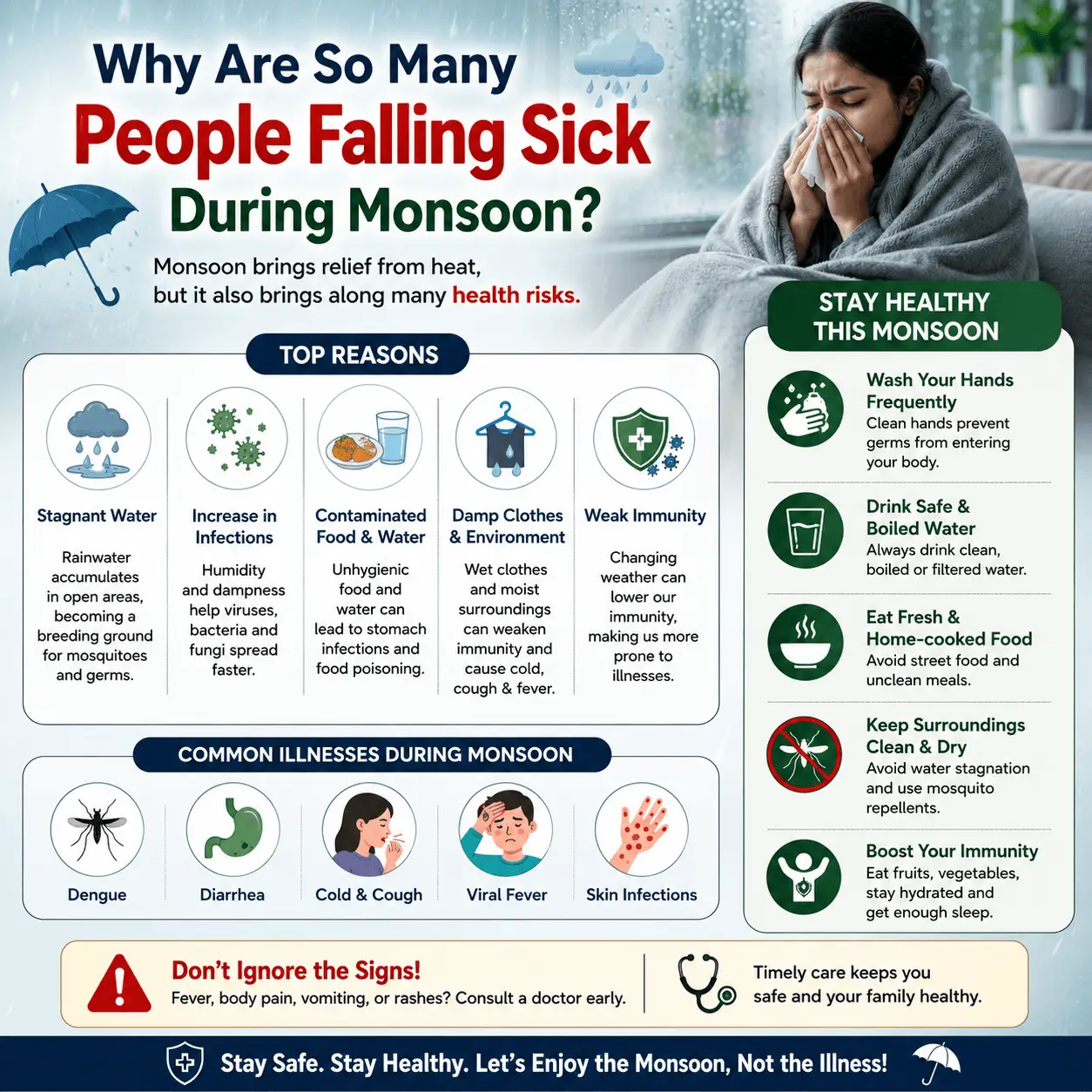
Why Are So Many People Falling Sick During Monsoon?
Why Are So Many People Falling Sick During Monsoon? Causes, Common Diseases & Prevention Tips
By Dr. Nadeem Ahmed, Consultant Physician
The arrival of monsoon brings much-needed relief from the scorching summer heat. The cool breeze, pleasant weather, and refreshing rain are welcomed by almost everyone. However, this season also comes with an increase in various health problems. Every year, hospitals and clinics witness a significant rise in patients suffering from fever, cough, stomach infections, dengue, viral illnesses, and respiratory issues during the rainy season. Have you ever wondered why so many people falling sick during monsoon? The answer lies in the environmental changes that occur during this season. Increased humidity, water stagnation, contamination of food and water, and rapid growth of bacteria and viruses make the monsoon one of the most challenging seasons for maintaining good health.
In this blog, we will discuss the reasons behind monsoon illnesses, the most common diseases during this season, and practical tips to keep yourself and your family healthy.
Why Do Diseases Increase During Monsoon?
1. Increased Humidity Encourages Germ Growth
Monsoon creates a humid environment that becomes ideal for the growth of bacteria, viruses, fungi, and mosquitoes. High moisture levels allow harmful microorganisms to survive and multiply rapidly, increasing the chances of infections.
Humidity can also weaken the body’s natural defense mechanisms, making people falling sick during monsoon.
2. Water Stagnation Leads to Mosquito Breeding
One of the biggest reasons for increased illnesses during monsoon is stagnant water. Rainwater often accumulates in coolers, flower pots, construction sites, tires, and open containers.
These stagnant water bodies become breeding grounds for mosquitoes that spread dangerous diseases such as:
Chikungunya
Even a small amount of standing water can produce hundreds of mosquitoes within a few days.
3. Contaminated Food and Drinking Water
Heavy rains often contaminate water supplies by mixing sewage and dirty water with drinking water sources. Additionally, food tends to spoil faster during humid weather.
This significantly increases the risk of:
Food poisoning
Typhoid
Gastroenteritis
Diarrhea
Hepatitis A and E
Street food and improperly stored food become particularly risky during this season.
4. Sudden Temperature Changes Affect Immunity
During monsoon, people frequently move between hot outdoor temperatures and cooler indoor environments. This constant fluctuation can affect the body’s immune system and increase susceptibility to viral infections.
Many individuals also tend to remain in damp clothes for prolonged periods, which may contribute to colds and respiratory illnesses.
5. Reduced Immunity During Seasonal Transition
Seasonal changes can temporarily weaken the immune response. Children, elderly individuals, pregnant women, and patients with chronic diseases such as diabetes or asthma are particularly vulnerable during monsoon.
Common Diseases During Monsoon
1. Viral Fever
Viral infections are among the most common illnesses during monsoon.
Symptoms include:
Fever
Body ache
Headache
Weakness
Sore throat
Cough
Most viral fevers improve within a few days, but persistent fever should never be ignored.
2. Dengue Fever
Dengue cases usually rise sharply during monsoon due to increased mosquito breeding.
Common symptoms include:
Sudden high fever
Severe headache
Pain behind the eyes
Joint and muscle pain
Skin rash
Low platelet count
Nausea and vomiting
Early diagnosis is extremely important because severe dengue can become life-threatening.
3. Malaria
Malaria is another mosquito-borne disease that becomes common during rainy seasons.
Symptoms may include:
High fever with chills
Sweating
Fatigue
Nausea
Headache
Prompt treatment is necessary to prevent complications.
4. Typhoid Fever
Contaminated food and water are major causes of typhoid during monsoon.
Symptoms include:
Prolonged fever
Abdominal pain
Loss of appetite
Weakness
Constipation or diarrhea
5. Gastrointestinal Infections
Digestive issues are extremely common during monsoon.
Patients often experience:
Loose motions
Vomiting
Stomach cramps
Dehydration
Food poisoning
Children are particularly vulnerable to dehydration resulting from stomach infections.
6. Respiratory Infections
Increased humidity and damp surroundings can trigger:
Common cold
Sinus infections
Bronchitis
Asthma attacks
Allergies
Patients with existing respiratory conditions should take extra precautions during this season.
Who Is at Higher Risk?
Certain individuals are more likely to fall sick during monsoon, including:
Children
Elderly individuals
Pregnant women
Diabetic patients
Asthma patients
Individuals with weakened immunity
Special care and preventive measures are particularly important for these groups.
How to Stay Healthy During Monsoon
Drink Safe Water
Always drink boiled, filtered, or purified water. Avoid consuming water from uncertain sources.
Avoid Stagnant Water
Regularly inspect your surroundings and eliminate standing water from:
Coolers
Buckets
Flower pots
Construction areas
Old tires
Eat Fresh and Hygienic Food
Avoid street food and consume freshly prepared home-cooked meals whenever possible.
Maintain Good Hand Hygiene
Frequent hand washing can significantly reduce the spread of infections.
Wash your hands:
Before eating
After using the washroom
After returning home
Before preparing food
Strengthen Your Immunity
A healthy immune system can help protect you from seasonal illnesses.
Include the following in your diet:
Fresh fruits
Green vegetables
Adequate hydration
Protein-rich foods
Sufficient sleep
Protect Yourself from Mosquitoes
Use:
Mosquito repellents
Full-sleeved clothing
Mosquito nets
Window screens
These simple measures can substantially reduce the risk of mosquito-borne diseases.
When Should You Visit a Doctor?
You should seek medical attention immediately if you experience:
Fever lasting more than two to three days
Persistent vomiting
Difficulty breathing
Severe weakness
Bleeding gums or nose
Severe abdominal pain
Signs of dehydration
Extremely low urine output
Early diagnosis and timely treatment can prevent serious complications.
Final Thoughts
Monsoon is undoubtedly one of the most enjoyable seasons of the year, but it also brings an increased risk of infections and illnesses. The combination of humidity, mosquito breeding, contaminated food and water, and weakened immunity contributes to the rise in the number of people falling sick during monsoon.
Fortunately, most monsoon-related diseases can be prevented through simple lifestyle measures such as maintaining hygiene, consuming safe food and water, strengthening immunity, and seeking timely medical care when symptoms arise.
If you or your family members experience persistent fever or any unusual symptoms during monsoon, do not ignore them. Early consultation and proper treatment can help ensure a safe and healthy rainy season.
Stay safe, stay healthy, and enjoy the monsoon responsibly.
Leave a Reply