
How Often Should You Get a Professional Teeth Cleaning?
How Often Should You Get Your Teeth Cleaned?
A Dentist Explains Why Regular Professional Teeth Cleaning Is Essential for a Healthy Smile
By Dr. Faheem Ahmed
One of the most common questions patients ask during their dental visit is, “How often should I get my teeth cleaned?”
Many people believe that brushing twice a day and flossing regularly are enough to maintain good oral health. While these habits are essential, they cannot completely remove hardened plaque (tartar) or detect dental problems in their early stages.
Professional teeth cleaning is about much more than making your teeth look brighter. It plays a vital role in preventing cavities, gum disease, bad breath, and even tooth loss. Regular cleanings also allow your dentist to identify potential problems before they become painful and expensive to treat.
So, how often should you schedule a professional dental cleaning? The answer depends on your oral health, lifestyle, and individual risk factors. Let’s explore what dentists recommend and why routine cleanings are one of the best investments you can make in your smile.
What Is Professional Teeth Cleaning?
Professional teeth cleaning, also known as dental prophylaxis, is a preventive dental procedure performed by a dentist or dental hygienist to remove plaque, tartar, and stains from your teeth.
Even if you brush and floss diligently, some areas of your mouth are difficult to clean completely. Over time, plaque hardens into tartar, which cannot be removed with a toothbrush. Only professional dental instruments can safely remove these deposits.
A typical teeth cleaning appointment includes:
Removal of plaque and tartar
Cleaning between the teeth and along the gumline
Polishing the teeth to remove surface stains
Flossing
Oral examination
Personalized oral hygiene advice
Many patients notice that their teeth feel smoother, cleaner, and fresher after the procedure.
The General Recommendation: Every Six Months
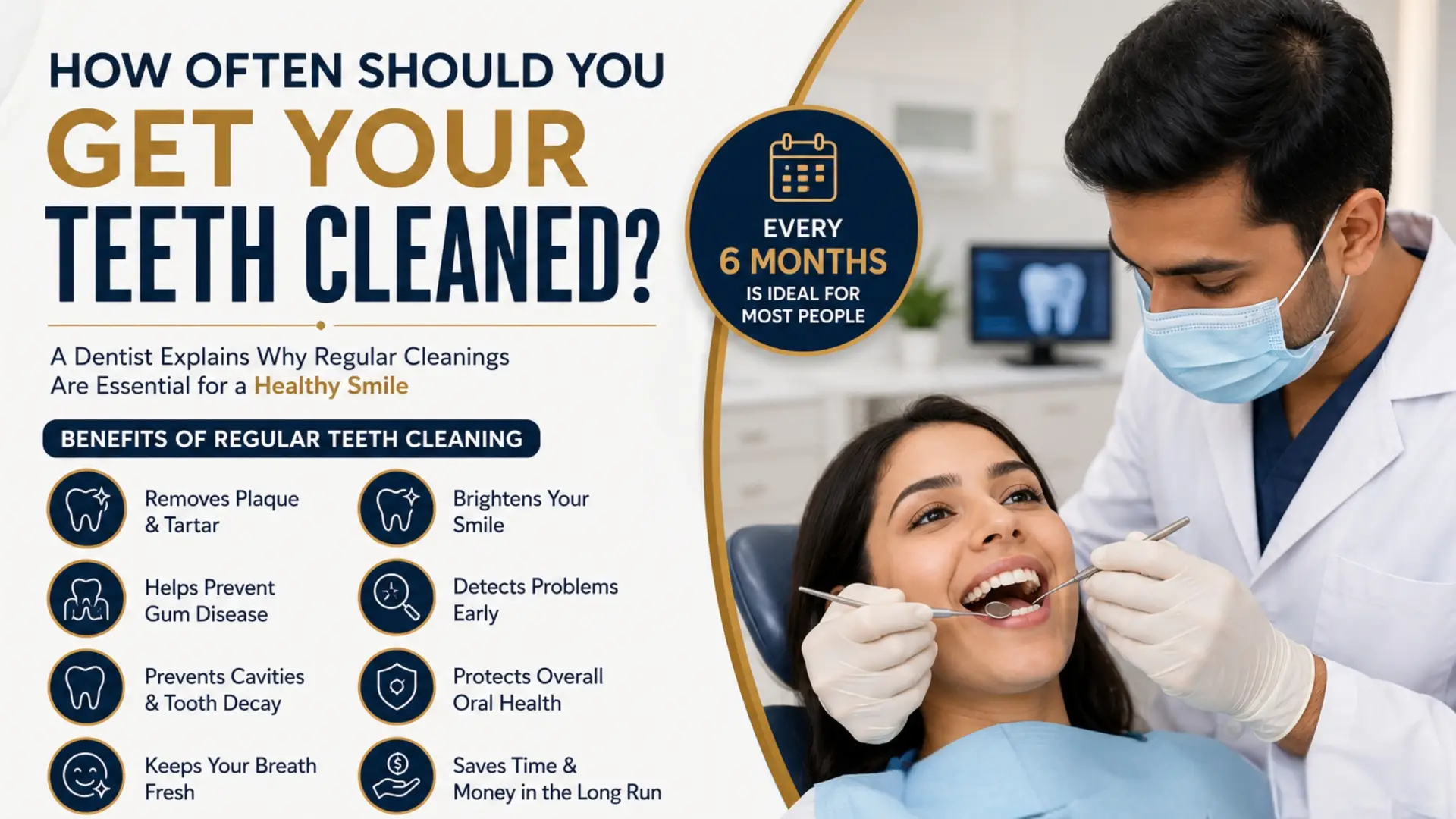
For most healthy adults and children, dentists recommend a professional teeth cleaning every six months.
This schedule helps:
Prevent plaque and tartar buildup
Detect cavities early
Identify gum disease before it worsens
Remove stains caused by tea, coffee, or tobacco
Maintain fresh breath
Keep your smile healthy and bright
Visiting the dentist twice a year also gives you peace of mind, knowing that your oral health is being monitored regularly.
Why Every Six Months?
Plaque begins forming on your teeth within hours after brushing. If not removed effectively, it gradually hardens into tartar.
Tartar creates rough surfaces where bacteria can easily accumulate, increasing the risk of:
Tooth decay
Gum inflammation
Bleeding gums
Bad breath
Bone loss around teeth
Regular professional cleaning removes these deposits before they cause permanent damage.
Think of it as routine maintenance for your teeth—similar to servicing your car before major problems develop.
Some People Need More Frequent Cleanings
Not everyone has the same oral health needs.
Certain individuals may benefit from professional cleaning every three to four months.
You may need more frequent cleanings if you have:
Gum Disease
Patients with gingivitis or periodontitis require closer monitoring and regular removal of bacteria beneath the gums.
Frequent cleanings help slow the progression of gum disease and protect the supporting bone around the teeth.
Diabetes
Diabetes can increase the risk of gum disease and infections.
Regular dental visits help maintain oral health while supporting overall health management.
Smokers and Tobacco Users
Smoking and chewing tobacco encourage plaque buildup, staining, and gum disease.
Professional cleanings help remove stains and reduce the harmful effects of tobacco on oral tissues.
Orthodontic Treatment
Patients wearing braces or aligners often find it more difficult to clean around their teeth.
Routine professional cleaning helps prevent plaque buildup and cavities during orthodontic treatment.
Dry Mouth
Saliva naturally protects teeth by washing away bacteria.
People with reduced saliva production are at greater risk of cavities and may require more frequent cleanings.
Pregnancy
Hormonal changes during pregnancy can increase the likelihood of gum inflammation.
Regular dental checkups and professional cleaning help maintain healthy gums throughout pregnancy.
What Happens If You Skip Professional Teeth Cleaning?
Many dental problems develop slowly and without noticeable symptoms.
Skipping routine cleanings may lead to:
Plaque and Tartar Build-Up
Over time, tartar becomes thicker and more difficult to remove.
It provides an ideal environment for harmful bacteria.
Gum Disease
The earliest stage of gum disease is gingivitis.
Without treatment, it may progress to periodontitis, causing:
Bleeding gums
Gum recession
Loose teeth
Bone loss
Tooth loss
Tooth Decay
Plaque bacteria produce acids that gradually damage tooth enamel.
Small cavities can eventually become deep infections requiring root canal treatment or extraction.
Persistent Bad Breath
Bad breath often results from bacteria hiding beneath plaque and tartar.
Professional cleaning removes these bacterial deposits and improves breath freshness.
Higher Treatment Costs
Preventive dental care is generally much less expensive than treating advanced dental problems.
Regular cleanings can help you avoid procedures such as:
Root canal treatment
Gum surgery
Tooth extraction
Dental implants
Crowns
Does Teeth Cleaning Damage Your Teeth?
This is one of the biggest myths in dentistry.
The answer is No.
Professional cleaning does not weaken or damage healthy tooth enamel.
Instead, it removes harmful deposits that contribute to cavities and gum disease.
Some people notice temporary sensitivity after cleaning, especially if they have exposed roots or inflamed gums. This usually disappears within a few days.
Does Teeth Cleaning Make Teeth White?
Professional cleaning removes surface stains caused by:
Tea
Coffee
Soft drinks
Smoking
Certain foods
However, cleaning does not permanently change the natural shade of your teeth.
If you want significantly whiter teeth, your dentist may recommend professional teeth whitening after your cleaning appointment.
Signs You Should Schedule a Cleaning Soon
Even if your next appointment isn’t due yet, book a dental visit if you notice:
Bleeding while brushing
Persistent bad breath
Yellow or brown tartar near the gums
Tooth sensitivity
Swollen gums
Loose teeth
Gum recession
Stains that don’t disappear after brushing
These signs may indicate that professional care is needed sooner.
How to Keep Your Teeth Cleaner Between Visits
Professional cleaning works best when combined with good daily oral hygiene.
Dentists recommend:
Brush twice daily using fluoride toothpaste.
Floss once every day.
Clean your tongue regularly.
Limit sugary snacks and drinks.
Drink plenty of water.
Eat calcium-rich foods.
Replace your toothbrush every three months.
Avoid tobacco products.
Visit your dentist regularly.
These habits significantly reduce plaque buildup and support healthier gums.
Frequently Asked Questions
Is professional teeth cleaning painful?
Most patients experience little or no discomfort.
If you have sensitive teeth or inflamed gums, your dentist can make the procedure more comfortable.
How long does a cleaning appointment take?
Most routine professional cleanings take between 30 and 60 minutes, depending on the amount of plaque and tartar present.
Can children get professional teeth cleaning?
Yes.
Children benefit greatly from regular cleanings, which help prevent cavities, encourage healthy habits, and allow early detection of dental problems.
Can I remove tartar at home?
No.
Once plaque hardens into tartar, it cannot be safely removed with home remedies or brushing alone.
Professional dental instruments are required.
Why Regular Dental Visits Matter
Professional cleaning isn’t just about cleaner teeth—it protects your overall oral health.
Routine dental visits allow your dentist to detect:
Cavities
Gum disease
Oral infections
Cracked teeth
Bite problems
Early signs of oral cancer
Many serious dental conditions can be treated quickly when detected early.
Final Thoughts
Professional teeth cleaning is one of the simplest and most effective ways to maintain a healthy smile. While most people benefit from a cleaning every six months, some individuals may need more frequent visits based on their oral health and lifestyle.
Remember, brushing and flossing are essential, but they cannot replace professional dental care. Regular cleanings help prevent problems before they become painful, expensive, or difficult to treat.
If it’s been more than six months since your last dental cleaning—or you’ve noticed bleeding gums, persistent bad breath, or tartar buildup—this is the perfect time to schedule a dental checkup.
Healthy smiles begin with preventive care, and a small investment in routine cleaning today can save you from major dental treatments tomorrow.
About the Author
Dr. Faheem Ahmed is dedicated to providing preventive, restorative, and cosmetic dental care with a patient-first approach. He believes that regular dental checkups and professional cleanings are the foundation of lifelong oral health and confident smiles.
Leave a Reply