
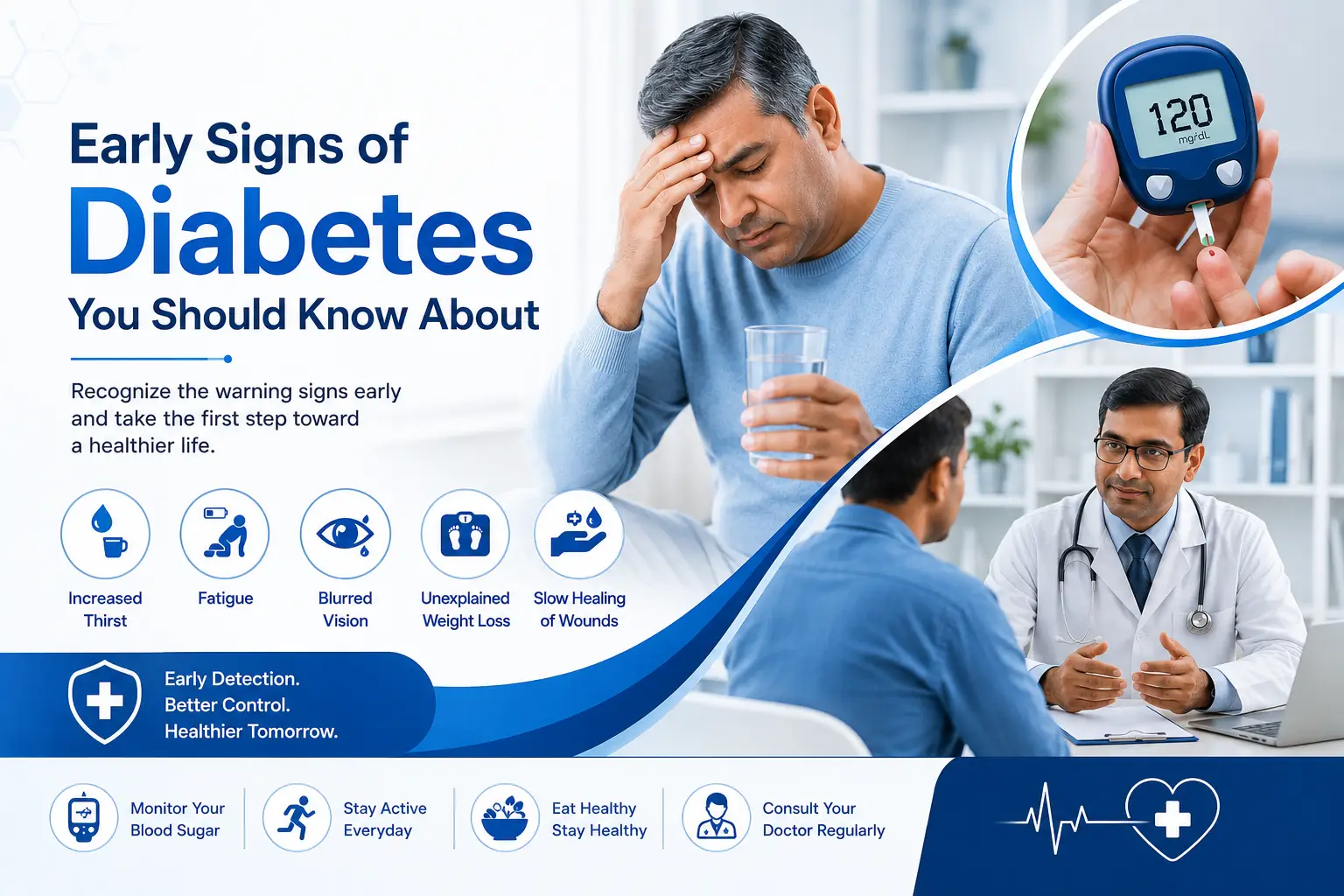
Early Signs of Diabetes You Should Know About
Early Signs of Diabetes You Should Know About
Diabetes is becoming one of the most common health conditions affecting people of all age groups today. What makes diabetes concerning is that many people do not notice the early symptoms until the condition starts affecting their overall health. Identifying the warning signs early can help prevent serious complications and make treatment much more effective.
What is Diabetes?
Diabetes is a condition where the body is unable to properly control blood sugar levels. This usually happens when the body either does not produce enough insulin or cannot use insulin effectively. Over time, high blood sugar levels can affect important organs such as the heart, kidneys, eyes, and nerves.
Early Signs of Diabetes You Should Never Ignore
1. Frequent Urination
One of the earliest signs of diabetes is needing to urinate more often than usual, especially during the night. This happens because excess sugar in the blood forces the kidneys to work harder to remove it from the body.
2. Increased Thirst
Frequent urination can lead to dehydration, making you feel unusually thirsty throughout the day. If you constantly feel the need to drink water without any obvious reason, it may be worth paying attention.
3. Constant Fatigue
Feeling tired even after getting enough sleep is another common warning sign. When the body cannot properly use glucose for energy, it often results in weakness and low energy levels.
4. Unexplained Weight Loss
Sudden weight loss without changes in diet or exercise can sometimes indicate diabetes. Since the body cannot use sugar properly for energy, it may start breaking down muscle and fat instead.
5. Blurred Vision
High blood sugar levels can temporarily affect the eyes by pulling fluid from tissues, causing blurry vision. If left untreated, diabetes can eventually lead to serious eye problems.
6. Slow Healing of Wounds
Cuts, bruises, or minor injuries taking longer than usual to heal may be a sign of diabetes. High sugar levels can affect blood circulation and weaken the body’s natural healing process.
7. Increased Hunger
Even after eating properly, some people with early diabetes feel hungry again very quickly. This happens because the body is unable to convert food into usable energy efficiently.
8. Tingling or Numbness in Hands and Feet
Persistently high blood sugar can begin affecting nerves, causing tingling sensations or numbness in the hands, feet, or legs. This symptom should never be ignored.
9. Frequent Infections
Recurring skin infections, urinary infections, or fungal infections can sometimes be linked to high blood sugar levels, as diabetes can weaken the immune system over time.
Who is at Higher Risk?
You may have a higher chance of developing diabetes if you have:
A family history of diabetes
Excess body weight or obesity
A physically inactive lifestyle
High blood pressure
Poor eating habits with excessive sugar intake
Persistent stress and poor sleep patterns
Why Early Diagnosis Matters
Many people live with diabetes for years without realizing it. Early diagnosis allows timely treatment and lifestyle changes that can help prevent serious complications such as heart disease, kidney damage, nerve problems, and vision loss.
Simple blood tests can help detect diabetes before it causes long-term damage.
When Should You Consult a Doctor?
If you notice one or more of these symptoms regularly, do not ignore them. Getting checked early can make a significant difference in managing your health and preventing future complications.
Your body often gives warning signs before a condition becomes serious. Paying attention to these signs can help you stay healthier for years to come.
Final Thoughts
Diabetes is a manageable condition when detected early. Understanding the early symptoms helps individuals take timely action and protect their long-term health.
If you experience frequent thirst, unusual fatigue, sudden weight changes, or other warning signs, consulting a qualified physician early is always the safest step toward better health.
Good health begins with awareness, and early awareness can make all the difference.
Leave a Reply