
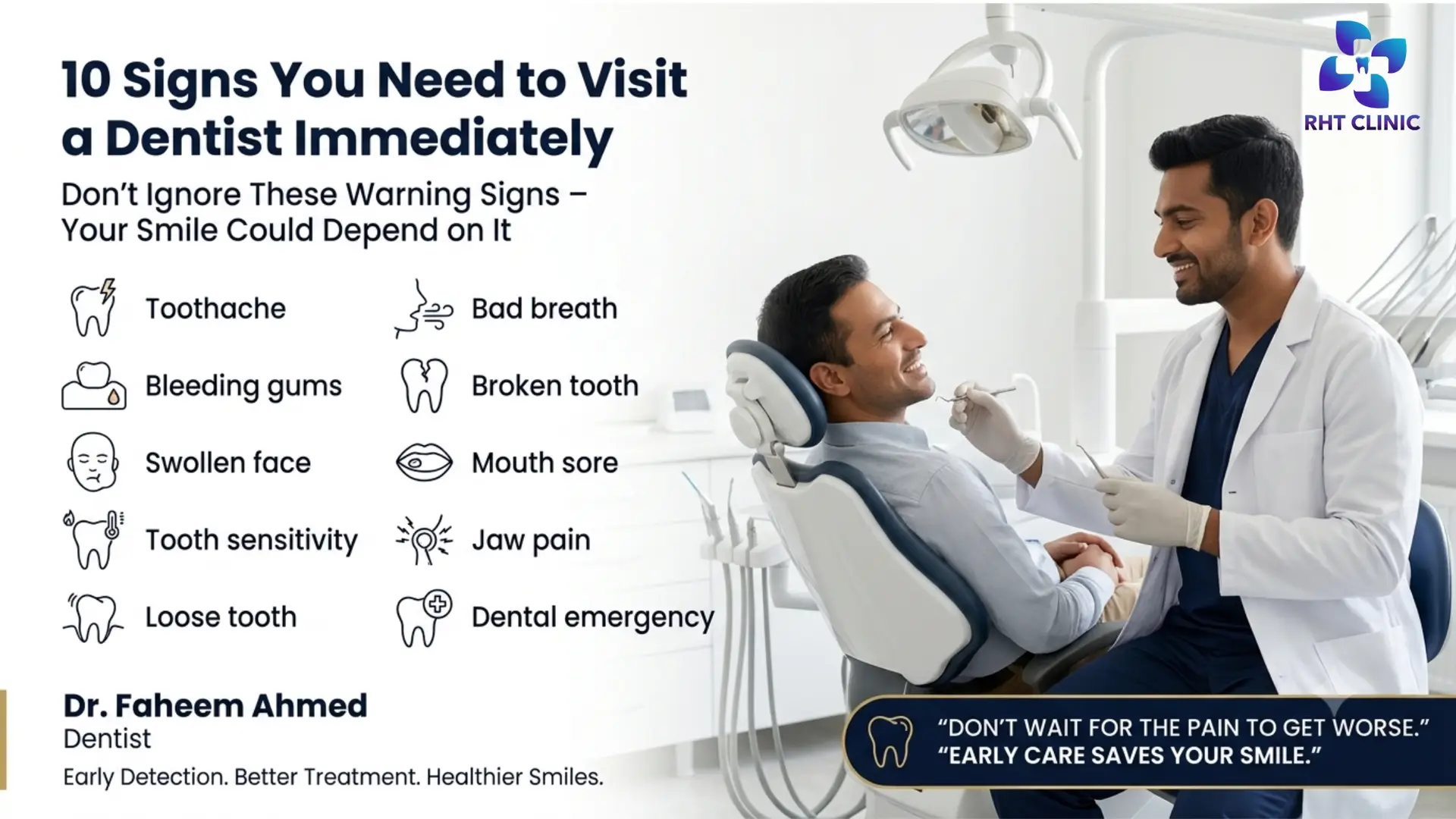
10 Signs You Need to Visit a Dentist Immediately
10 Signs You Need to Visit a Dentist Immediately
Don’t Ignore These Warning Signs – Your Smile Could Depend on It
By Dr. Faheem Ahmed
Most people visit the dentist only when the pain becomes unbearable. Unfortunately, waiting until a dental problem becomes severe often means more complicated treatment, higher costs, and a longer recovery period.
Your mouth is constantly giving you signals about your oral health. A small toothache, occasional bleeding gums, or sensitivity to hot and cold foods may seem harmless at first, but these symptoms can indicate underlying dental issues that require immediate attention.
Ignoring these warning signs can allow problems to worsen, leading to infections, tooth loss, gum disease, or even complications that affect your overall health.
As a dentist, I often meet patients who say, “I wish I had come earlier.” Early diagnosis almost always leads to simpler, less invasive, and more affordable treatment.
Here are ten important signs that mean you should schedule a dental appointment without delay.
1. Persistent Toothache That Doesn’t Go Away
A toothache is one of the most common reasons people seek dental care. While occasional discomfort may occur after eating something very cold or hard, pain that lasts for more than a day or two should never be ignored.
Persistent tooth pain could indicate:
Deep tooth decay
An infected tooth nerve
A cracked tooth
Gum infection
Dental abscess
Many people try to manage the pain with over-the-counter painkillers, but medication only masks the symptoms—it does not treat the underlying problem.
If left untreated, the infection can spread deeper into the tooth and surrounding tissues, making treatment more complex.
When should you visit immediately?
Pain keeps you awake at night.
Pain worsens while chewing.
Swelling develops around the tooth.
Pain spreads to your jaw or ear.
2. Bleeding Gums While Brushing or Flossing
Healthy gums should not bleed during routine brushing or flossing.
Many people assume bleeding gums are normal because they happen frequently. In reality, bleeding gums are often the earliest sign of gum disease.
Common causes include:
Gingivitis
Poor oral hygiene
Plaque buildup
Early periodontal disease
If gum disease progresses, it can damage the tissues and bone supporting your teeth, eventually leading to loose teeth or tooth loss.
Early gum treatment can reverse many of these problems before permanent damage occurs.
3. Swollen Face or Jaw
Facial swelling is one of the clearest signs that a dental infection may be spreading.
Swelling often develops because bacteria have reached the deeper tissues surrounding the tooth.
This situation should never be ignored.
You may also experience:
Severe tooth pain
Fever
Difficulty opening your mouth
Swollen lymph nodes
Bad taste in the mouth
A dental abscess requires immediate treatment to prevent the infection from spreading further.
4. Tooth Sensitivity That Keeps Getting Worse
Do your teeth hurt when drinking cold water, hot tea, or eating sweets?
Temporary sensitivity may not always be serious, but increasing or long-lasting sensitivity could indicate:
Worn enamel
Tooth decay
Exposed tooth roots
Cracked teeth
Gum recession
Early diagnosis can prevent the need for more extensive treatments such as root canal therapy.
Using sensitive toothpaste may help temporarily, but it is important to identify the actual cause.
5. Loose or Shifting Teeth
Adult teeth should never feel loose.
If you notice movement while chewing or biting, it may be caused by:
Advanced gum disease
Bone loss
Dental trauma
Teeth grinding
Infection
Loose teeth are often a sign that the supporting bone has been affected.
Seeking treatment early may help save the affected tooth and prevent additional damage.
6. Persistent Bad Breath
Occasional bad breath after eating certain foods is normal.
However, chronic bad breath that continues despite brushing and mouthwash often signals an underlying dental problem.
Possible causes include:
Gum disease
Tooth decay
Dental infections
Plaque buildup
Food trapped between teeth
Bad breath caused by oral disease will not disappear until the source is treated.
Professional dental cleaning and examination are usually the first steps toward fresher breath.
7. A Broken, Chipped, or Cracked Tooth
Even a small crack in your tooth should be evaluated promptly.
Many cracks are invisible to the naked eye but can allow bacteria to enter the inner layers of the tooth.
Ignoring a cracked tooth increases the risk of:
Infection
Severe pain
Tooth fracture
Root canal treatment
Tooth extraction
Modern dentistry offers several options to restore damaged teeth, including bonding, crowns, or veneers, depending on the severity.
8. Mouth Sores That Don’t Heal
Most mouth ulcers heal naturally within one to two weeks.
However, sores that persist beyond two weeks require professional evaluation.
Persistent sores may result from:
Chronic irritation
Infection
Nutritional deficiencies
Autoimmune conditions
Oral cancer
Early detection plays a crucial role in successful treatment, especially if the sore is related to a serious condition.
If you notice unusual white patches, red patches, lumps, or ulcers that do not heal, don’t delay your dental visit.
9. Difficulty Chewing or Jaw Pain
Pain while chewing or opening your mouth is not normal.
Possible causes include:
Wisdom tooth problems
Temporomandibular joint (TMJ) disorders
Tooth infections
Teeth grinding
Muscle strain
Ignoring jaw pain can make eating, speaking, and sleeping increasingly uncomfortable.
A thorough dental examination helps determine the exact cause and the appropriate treatment.
10. Knocked-Out or Lost Tooth
A knocked-out permanent tooth is a true dental emergency.
Quick action greatly improves the chances of saving the tooth.
If your tooth gets knocked out:
Pick it up by the crown, not the root.
Rinse it gently with clean water if dirty.
Do not scrub or remove attached tissue.
Try placing it back into the socket if possible.
If not, keep it in milk or saliva.
Visit your dentist immediately.
The best chance of saving the tooth is usually within the first 30 to 60 minutes.
Prompt treatment can often prevent permanent tooth loss.
Why You Should Never Delay Dental Care
Many dental conditions worsen silently.
A small cavity can develop into severe infection.
Mild gum inflammation can become advanced periodontal disease.
Minor sensitivity can eventually require root canal treatment.
Early treatment generally offers several advantages:
Less discomfort
Simpler procedures
Lower treatment costs
Better long-term outcomes
Preservation of natural teeth
Preventive dentistry is always better than emergency dentistry.
Tips to Protect Your Oral Health
Although emergencies cannot always be prevented, good oral hygiene significantly reduces your risk.
Follow these healthy habits:
Brush twice daily using fluoride toothpaste.
Floss every day.
Limit sugary foods and drinks.
Drink plenty of water.
Avoid tobacco products.
Wear a mouthguard during sports.
Visit your dentist every six months for routine checkups.
Replace your toothbrush every three months.
Maintain a balanced diet rich in vitamins and minerals.
Consistent preventive care is the foundation of lifelong oral health.
When Should You Seek Emergency Dental Care?
Seek immediate dental attention if you experience:
Severe or persistent tooth pain
Facial swelling
Excessive bleeding from the mouth
Knocked-out tooth
Broken tooth with pain
Dental abscess
Difficulty swallowing due to swelling
Sudden loosening of permanent teeth
Delaying treatment may increase the risk of complications and permanent damage.
Final Thoughts
Your teeth and gums play an essential role in your overall health, confidence, and quality of life. Ignoring dental symptoms rarely makes them disappear—in most cases, they become more serious over time.
Listening to your body’s warning signs and seeking professional care early can help preserve your natural teeth, reduce discomfort, and prevent costly treatments in the future.
Remember, the goal isn’t simply to treat dental problems—it’s to prevent them before they become emergencies.
If you notice any of the signs discussed above, don’t wait for the pain to worsen. An early dental examination can make all the difference.
About the Author
Dr. Faheem Ahmed is committed to providing comprehensive, patient-centered dental care with a focus on prevention, early diagnosis, and modern treatment solutions. His goal is to help every patient achieve a healthy, confident smile through compassionate care and evidence-based dentistry.
Leave a Reply