
Bad Breath That Won’t Go Away: Causes & Treatment
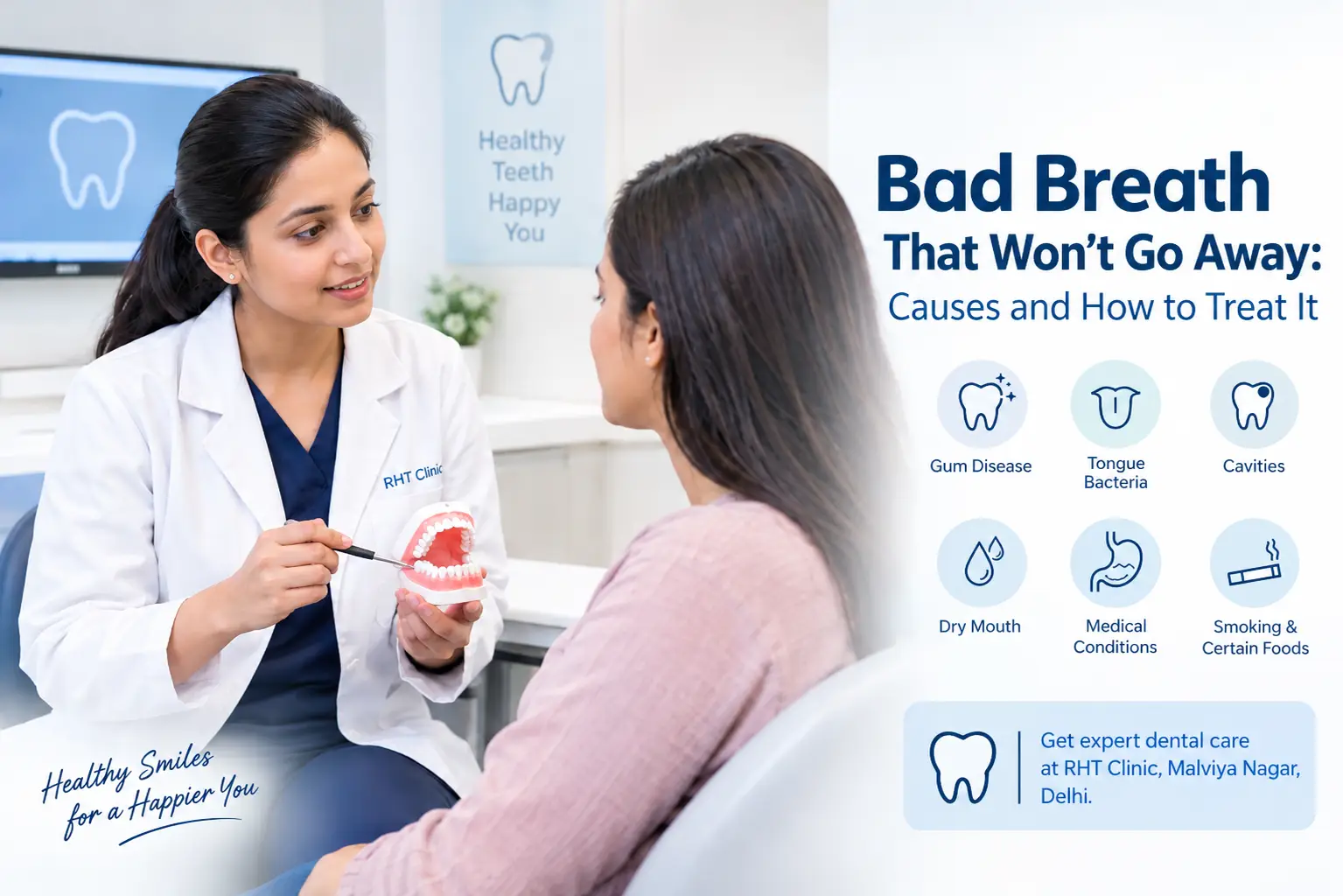
Bad Breath That Won’t Go Away: Causes and How to Treat It
Have you ever brushed your teeth, used mouthwash, and still noticed an unpleasant smell from your mouth a few hours later? You are not alone. Persistent bad breath, also known as halitosis, is a common problem that can affect your confidence, social interactions, and everyday life.
The good news? Bad breath is often manageable once you identify its underlying cause.
While occasional bad breath after waking up or eating certain foods is normal, a smell that keeps returning despite regular brushing may be a sign that something needs attention. Let’s understand why it happens, what you can do about it, and when it is time to visit a dentist.
What Causes Bad Breath That Won’t Go Away?
Bad breath is not always caused by poor oral hygiene. In many cases, the problem begins inside the mouth, but certain medical conditions can also contribute.
Here are some of the most common causes.
1. Bacteria on the Tongue
Your tongue has a textured surface where bacteria, food particles, and dead cells can accumulate. These bacteria release unpleasant-smelling compounds that contribute to persistent bad breath.
What can help?
Clean your tongue gently every day using a tongue scraper or toothbrush.
Brush twice daily with fluoride toothpaste.
Drink enough water to prevent your mouth from becoming dry.
If you brush regularly but skip tongue cleaning, this simple step may make a noticeable difference.
2. Gum Disease and Poor Oral Hygiene
Your gums can tell you a lot about your oral health. Plaque buildup along the gumline can cause inflammation, bleeding, and gum disease. As the condition progresses, bacteria may accumulate in deeper spaces around the teeth, making bad breath difficult to control.
Look out for these warning signs:
Gums that bleed while brushing or flossing
Red, swollen, or tender gums
Persistent bad breath or an unpleasant taste
Gums that appear to be pulling away from your teeth
If you notice these symptoms, brushing harder is not the solution. A dental examination can help identify the cause and determine the appropriate treatment.
3. Food Particles Trapped Between Teeth
Food particles trapped between teeth can break down and contribute to unpleasant breath. This is particularly common when food repeatedly gets stuck in the same area.
Brushing alone may not remove everything.
Try this:
Clean between your teeth daily with dental floss or an appropriately sized interdental brush.
Rinse your mouth with water after meals.
Arrange a dental check-up if food frequently gets trapped in one spot.
Repeated food trapping may indicate a gap, a cavity, a defective filling, or a gum problem that needs attention.
4. Dry Mouth
Saliva does more than help you swallow and speak. It washes away food debris and helps control oral bacteria.
When your mouth produces too little saliva, bacteria and odour-causing substances can build up more easily.
Dry mouth may occur because of:
Dehydration
Sleeping with your mouth open
Certain medicines
Smoking or tobacco use
Some medical conditions
Drink water regularly throughout the day. Sugar-free gum may help stimulate saliva if you can chew safely. If dryness persists, consult a dentist or doctor rather than relying on mouthwash alone.
5. Cavities and Dental Infections
A cavity can trap food and bacteria, while an infected tooth may cause a persistent unpleasant taste or smell. In these cases, mouthwash may temporarily mask the odour without treating the underlying problem.
Possible warning signs include toothache, sensitivity, swelling, pain while chewing, or a bad taste coming from a particular area.
If you have these symptoms, arrange a dental examination. A dentist can determine whether you need a filling, treatment for an infected tooth, or another procedure.
Important: Facial swelling accompanied by difficulty breathing or swallowing requires emergency medical attention.
6. Tonsil Stones
Tonsil stones are small deposits that form in the crevices of the tonsils. They can contain trapped debris and bacteria and may produce a strong, unpleasant smell.
You may also notice:
Small white or yellow deposits at the back of your throat
A persistent bad taste
A sensation that something is stuck in your throat
Occasional throat irritation
If you suspect tonsil stones, consult a doctor or an ear, nose and throat specialist if symptoms persist. Avoid digging into your tonsils with sharp objects.
7. Certain Foods, Smoking and Tobacco
Garlic, onions, and some strongly flavoured foods can temporarily affect your breath. Smoking and tobacco use can also contribute to persistent bad breath, dry mouth, and gum disease.
If the smell continues long after the food-related odour should have faded, or persists despite good oral hygiene, look for another underlying cause.
8. Medical Conditions That May Contribute to Bad Breath
Sometimes, bad breath is associated with problems outside the mouth, including certain ear, nose and throat conditions, sinus infections, or acid reflux.
Less commonly, distinctive breath changes may occur with serious medical conditions, including diabetic ketoacidosis.
If your dentist cannot identify an oral cause, or you have other unexplained symptoms, a general physician can assess whether further investigation is needed.
Do not assume that persistent bad breath means you have a serious illness. The key is to investigate symptoms appropriately rather than self-diagnose.
How to Get Rid of Persistent Bad Breath
The most effective treatment depends on what is causing the problem. Start with these practical steps.
Step 1: Follow a Consistent Oral Hygiene Routine
Brush your teeth twice daily for two minutes using fluoride toothpaste. Clean your tongue gently and clean between your teeth every day.
Replace your toothbrush when the bristles become worn, and avoid brushing aggressively, as this can damage your gums.
Step 2: Stay Hydrated
Drink water regularly, particularly if you experience a dry mouth. Reduce excessive caffeine if it worsens your dryness, and avoid tobacco products.
If you frequently wake up with a dry mouth, consider whether mouth breathing, nasal congestion, or medication could be contributing.
Step 3: Choose Mouthwash Carefully
A therapeutic mouthwash may help reduce odour-causing bacteria, depending on its ingredients. However, mouthwash is not a substitute for brushing, cleaning between teeth, or treating gum disease.
If your mouth is dry, choose an alcohol-free product where appropriate. Ask your dentist which option is suitable for you.
Step 4: Treat the Underlying Dental Problem
If plaque, gum disease, cavities, or an infected tooth is responsible, you may need professional dental care.
Depending on the diagnosis, treatment could include professional cleaning, gum treatment, a filling, or treatment for a dental infection.
Masking the smell without treating the cause is unlikely to provide lasting relief.
Step 5: Seek Medical Advice When Necessary
If your breath remains unpleasant despite good oral hygiene and a dental assessment, your dentist may recommend seeing a general physician or another appropriate specialist.
This is especially important if bad breath occurs alongside persistent sinus symptoms, swallowing difficulties, unexplained weight loss, or other new symptoms.
When Should You Visit a Dentist for Bad Breath?
Occasional bad breath is usually nothing to worry about. However, consider booking a dental appointment if:
Bad breath continues despite consistent oral hygiene.
Your gums bleed, swell, or become tender.
You have a persistent unpleasant taste in your mouth.
Food repeatedly gets trapped between particular teeth.
You experience tooth pain, loose teeth, or gum recession.
The problem keeps returning after using mouthwash.
A dental examination can help identify the cause and guide you towards appropriate treatment.
If you develop severe facial swelling, difficulty breathing or swallowing, or other rapidly worsening symptoms, seek urgent medical care.
Can Bad Breath Be Prevented?
In many cases, yes. A few consistent habits can help keep your mouth healthier and your breath fresher.
Brush twice daily with fluoride toothpaste.
Clean your tongue every day.
Floss or clean between your teeth daily.
Drink enough water.
Limit sugary snacks and drinks.
Avoid smoking and tobacco.
Attend regular dental check-ups.
Address gum bleeding, tooth pain, and persistent dry mouth early.
Remember, fresh breath is not just about using a mint or mouthwash. It starts with a healthy mouth.
Frequently Asked Questions About Persistent Bad Breath
Why do I still have bad breath after brushing my teeth?
Bad breath may persist because of bacteria on the tongue, gum disease, food trapped between teeth, dry mouth, cavities, or another underlying condition. If it keeps returning, a dental examination can help identify the cause.
Can bad breath come from the stomach?
Most persistent bad breath originates in the mouth. However, certain digestive conditions, including acid reflux, may contribute. If dental causes have been ruled out, consult a healthcare professional for further assessment.
Does mouthwash permanently cure bad breath?
Usually not on its own. Mouthwash may reduce odour temporarily or help control bacteria, but lasting improvement depends on addressing the underlying cause.
Why is my breath worse in the morning?
Saliva production decreases during sleep, allowing odour-causing substances to accumulate. Morning breath is common and usually improves after drinking water, brushing, and cleaning the tongue. Persistent bad breath throughout the day may need further evaluation.
Can gum disease cause bad breath?
Yes. Gum inflammation and deeper periodontal pockets can allow bacteria to accumulate, contributing to persistent odour. Professional assessment and appropriate gum treatment can help.
Which doctor should I consult for bad breath?
Start with a dentist, particularly if the problem persists despite good oral hygiene. If no oral cause is found, a general physician can assess other possible causes and refer you to a specialist if necessary.
Get the Right Dental Care at RHT Clinic, Malviya Nagar, Delhi
Persistent bad breath can be frustrating, especially when brushing and mouthwash do not seem to help. But you do not have to keep guessing at the cause.
At RHT Clinic, Malviya Nagar, Delhi, a dental consultation can help assess your oral health, identify possible causes of bad breath, and determine the most appropriate next steps.
Whether the problem is related to gum health, plaque buildup, cavities, or another dental concern, early assessment can help prevent minor issues from becoming more complicated.
Do not ignore persistent bad breath. Book a dental consultation at RHT Clinic to understand the cause and take the right steps towards better oral health.
RHT Clinic
T-540, Shop No. 3, Khirki Extension, Malviya Nagar, New Delhi – 110017
*This article is for general educational purposes and does not replace a professional dental or medical consultation.
Leave a Reply