
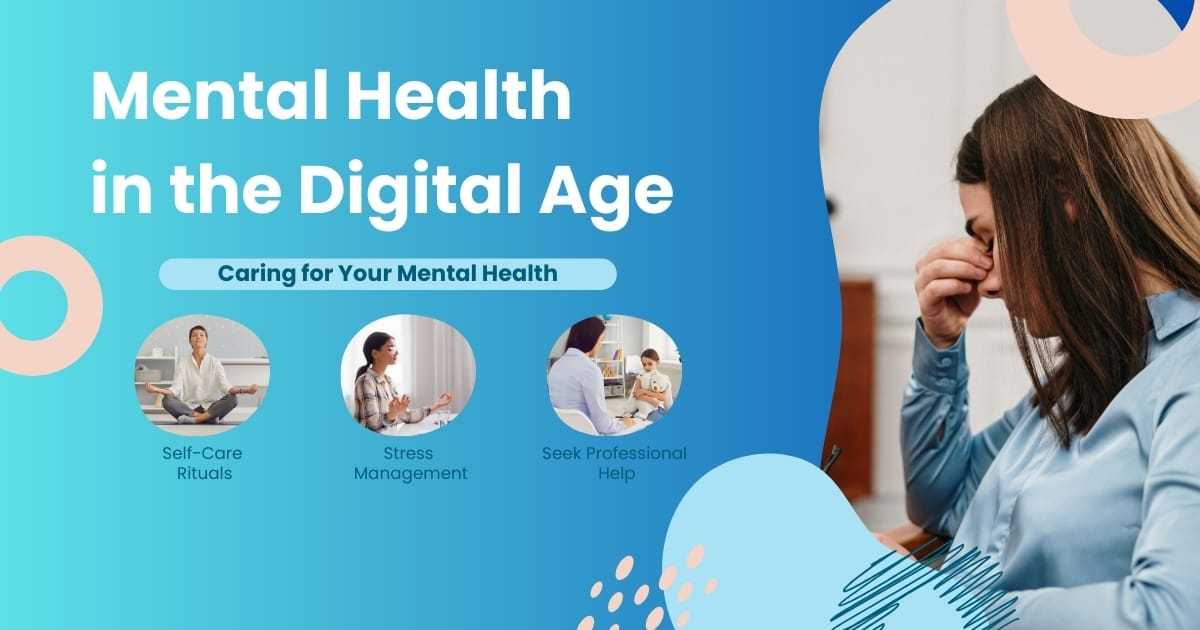
Mental Health in the Digital Age: A Complete Guide
How the Digital World Affects Mental Health
Technology has transformed how we work, communicate, and even relax. But when used excessively or without boundaries, it can impact our minds in subtle but serious ways.
1. Screen Overload and Stress
Spending long hours in front of screens can cause fatigue, irritability, and increased stress levels. Constant exposure to information overload can overwhelm the brain, leaving us restless and anxious.
2. Sleep Disruptions
Using phones or laptops late at night exposes us to blue light, which reduces melatonin (the sleep hormone). This is why many people complain of difficulty falling asleep or waking up tired despite “sleeping enough hours.”
3. Social Media and Self-Esteem
Comparing ourselves with the “perfect lives” displayed on social media often creates self-doubt and low confidence. Over time, this can contribute to anxiety or depression.
4. Work-Life Imbalance
With remote working and constant email or WhatsApp notifications, many people struggle to separate professional and personal time. This lack of boundaries fuels burnout.
5. Isolation in a Connected World
Ironically, while digital platforms connect us virtually, they often replace real human interaction. Loneliness is now more common than ever, especially among young adults.
Signs That Your Mental Health Is Being Affected
It’s easy to brush off stress or anxiety as “just part of life.” But there are clear signs that your digital habits may be harming your mental health:
- Feeling restless or anxious when not using your phone
- Difficulty concentrating on tasks without checking notifications
- Poor sleep quality
- Headaches, eye strain, or fatigue after screen time
- Low mood, irritability, or frequent sadness
- Loss of interest in hobbies outside the digital world
If you notice these symptoms lasting more than a few weeks, it may be time to relook at your habits and seek professional advice.
Practical Steps to Protect Your Mental Health
Taking care of your mental well-being doesn’t always mean making huge lifestyle changes. Even small adjustments can create a healthy balance between digital life and real life.
1. Practice Mindfulness
Spend at least 10 minutes daily focusing on your breath, a guided meditation, or simply being aware of your surroundings without distractions. Mindfulness reduces stress and helps you become more present.
2. Set Boundaries With Technology
Avoid checking emails or messages right after waking up or before bed.
Create “phone-free zones” such as during family meals or while spending time with children.
Use apps that track and limit your screen time.
3. Stay Physically Active
Regular exercise improves mood, reduces anxiety, and helps regulate sleep. Even a 20-minute walk in South Delhi’s parks can do wonders for your mental well-being.
4. Prioritize Sleep
Follow a fixed sleep routine and keep devices away at least an hour before bedtime. Reading a book, listening to calming music, or gentle stretches can help you unwind.
5. Maintain Social Connections
Make time for face-to-face interactions with family and friends. Real conversations provide emotional support that digital interactions cannot replace.
6. Seek Professional Support
There is no shame in asking for help. Sometimes just talking to a professional can make a huge difference.
Mental Health and the Younger Generation
Teenagers and young adults are most affected by the digital age. Online classes, social media pressures, and late-night gaming often leave them stressed. As parents, it’s important to:
- Encourage outdoor activities
- Talk openly about emotions
- Limit screen time without being overly strict
- Watch for sudden behavioural changes
Early guidance can prevent long-term mental health struggles in children and adolescents.
Digital Detox: Do You Need One?
A “digital detox” means consciously taking a break from screens. Even one day a week without social media or unnecessary phone use can improve mood, focus, and sleep.
Tips for a successful detox:
- Turn off notifications for non-essential apps
- Replace screen time with hobbies like reading, gardening, or cooking
- Spend time in nature to refresh your mind
When to See a Doctor
Not every stress symptom requires medical attention, but it’s important to seek help if:
- You feel persistently sad, anxious, or hopeless
- Sleep problems continue for more than two weeks
- Stress affects your work or relationships
- You rely on alcohol or substances to cope
- You have thoughts of harming yourself
At such times, visiting a mental health clinic can provide timely guidance and support.
FAQs on Mental Health in the Digital Age
1. How do I know if social media is affecting my mental health?
If you often feel low after using social media, compare yourself to others, or spend hours scrolling without real benefit, it may be negatively impacting your mental health.
2. Can screen time cause depression?
Excessive screen time alone may not directly cause depression, but it contributes to poor sleep, isolation, and low self-esteem, which increase the risk of depression.
3. How much screen time is healthy?
For adults, keeping non-work screen time under 2 hours daily is recommended. Children should have even less, depending on their age.
4. What is the best way to manage digital stress?
Setting boundaries, taking regular breaks, practicing mindfulness, and staying physically active are effective ways to manage stress from constant connectivity.
5. Does RHT Clinic provide counselling for stress and anxiety?
Yes. At RHT Clinic, Malviya Nagar, our doctors provide personalized guidance and connect patients with appropriate mental health support whenever needed.
6. Can lifestyle changes alone improve my mental health?
For many, simple steps like better sleep, exercise, and reduced screen time work well. But if symptoms persist, professional help is important.
Final Thoughts
The digital world is here to stay, but we must learn to use it in a balanced way. Protecting your mental health is just as important as caring for your physical health. If you feel stressed, anxious, or overwhelmed, don’t hesitate to seek support.
At RHT Clinic, Malviya Nagar, South Delhi, we are committed to helping you achieve complete well-being. Take the first step today—your mind and body will thank you.
RHT Clinic – Malviya Nagar, Delhi
www.rhtclinic.com
+91 99995 55363
Mental Health is Very Important Topic of the Ultra Modern Lifestyle of Present Scenario, DIGITAL GADGETS besides the Negatives of Social Media affects unknowingly. Most of us Unaware the IMPACT on our Well-being.
Besides On-screen Time & other enumated list in the Shared Article, we need to avoid Unwanted Marketing Calls 📞, Interaction with Unlikminded Persons, Completely avoid Posting Political & Religious Comments on Social Media as results into Disagreements, Exchange of Bad Mouth, Language and Spoilt Distant Relationship, Bad Mood, Increased Irritation adversely affect Mental Health and Over all Physical Health, Blood Pressure, Reduced Digestive Enzymes in the System, may cause Increased Blood Sugar Levels, Imbalance of Harmonal Level, Mood Swings, Interpersonal Relations with Close Friends & Family may see Deterioration, Loss of Precious Time which needs to be Utilised for Betterment and otherwise useful Gains on Daily Basis.
Thanks Sharing Need of Present Life Correction Techniques due Exposure to Digital World.