
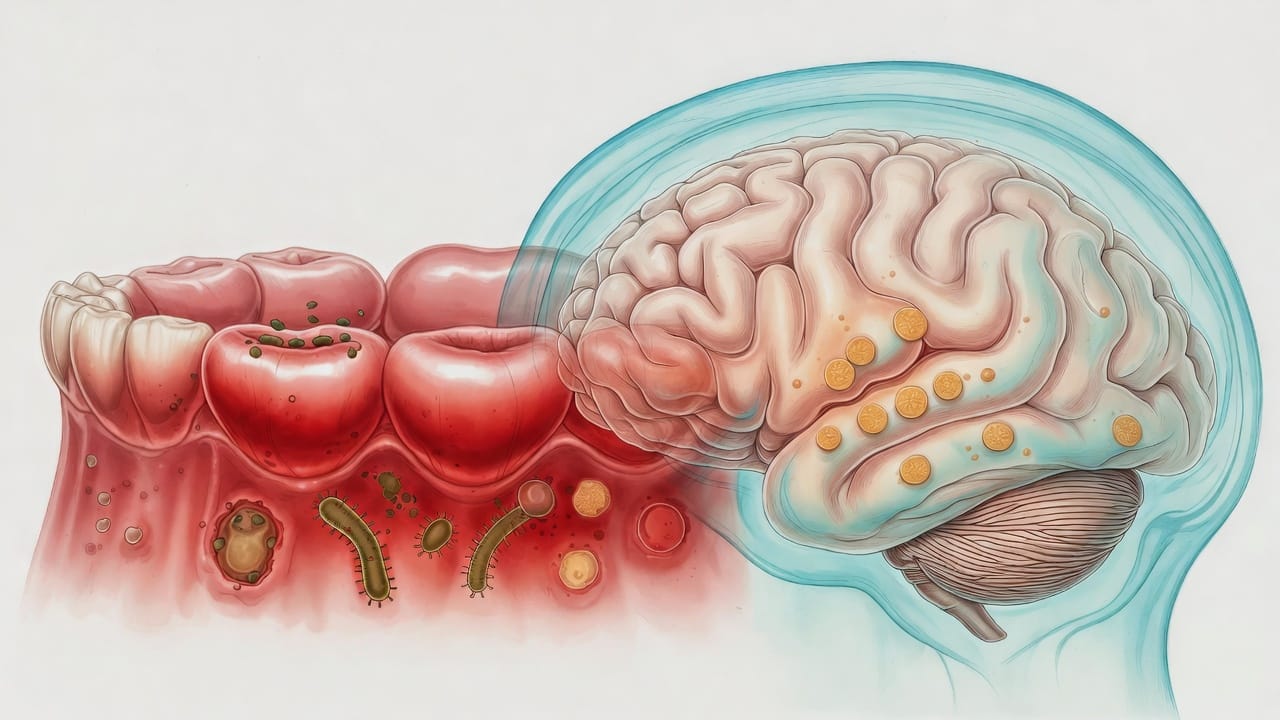
Link Between Gum Disease and Alzheimer’s
Could Alzheimer’s Disease Begin in the Mouth?
What Science Reveals About Gum Disease and Brain Health
For decades, Alzheimer’s disease has been viewed primarily as a disorder of aging and brain degeneration. However, emerging scientific evidence suggests that the story may begin much earlier—and possibly in an unexpected place: your mouth.
Recent research has raised an important and thought-provoking question: Can chronic gum disease contribute to the development of Alzheimer’s disease? While Alzheimer’s is still a complex condition with multiple risk factors, scientists are increasingly uncovering a compelling link between oral infections and cognitive decline.
At RHT Clinic, we believe in translating advanced research into practical health awareness—because prevention often begins with understanding.
The Infection Hypothesis: A New Way of Looking at Alzheimer’s
Traditionally, Alzheimer’s disease has been associated with amyloid-beta plaques and tau protein tangles in the brain. But what triggers these changes has remained unclear.
In recent years, researchers have explored the possibility that chronic infections may play a role in initiating or accelerating Alzheimer’s pathology. Among the strongest leads so far is a bacterium commonly associated with gum disease.
The Gum Disease–Alzheimer’s Connection Explained
A landmark 2019 study published in Science Advances reported the presence of Porphyromonas gingivalis, the primary bacterium responsible for chronic periodontitis (gum disease), in the brains of deceased Alzheimer’s patients.
This discovery was significant for several reasons:
The bacterium was found inside brain tissue, not just in blood samples
Its toxic enzymes, known as gingipains, were detected in regions affected by Alzheimer’s
These enzymes were closely associated with tau protein and ubiquitin, both key markers of Alzheimer’s disease
In controlled animal studies, oral infection with P. gingivalis led to:
Migration of the bacteria to the brain
Increased production of amyloid-beta
Heightened neuroinflammation
These findings strongly suggest that chronic gum infection may not just coexist with Alzheimer’s—but could be involved in its early development.
Cause or Consequence? Why This Discovery Matters
One long-standing question has been:
Does gum disease contribute to Alzheimer’s, or does Alzheimer’s lead to poor oral hygiene?
The study addressed this concern by identifying gingipains even in individuals who had no formal diagnosis of Alzheimer’s but showed early brain pathology.
This suggests that:
Brain infection may occur before memory loss begins
Poor oral health is not merely a result of dementia
Gum disease could be an early and modifiable risk factor
From a preventive healthcare perspective, this is a critical insight.
Can Treating Gum Disease Reduce Alzheimer’s Risk?
In experimental models, researchers tested a compound designed to block gingipains. The results showed:
Reduced bacterial load in the brain
Lower amyloid-beta levels
Decreased neuroinflammation
While human clinical trials are still ongoing and no definitive treatment conclusions can yet be drawn, this research reinforces one powerful message:
Maintaining good oral health may support long-term brain health.
Oral Health Is Not Just About Teeth
At RHT Clinic, we emphasize that gum disease is not a localized problem. Chronic periodontitis has already been linked to:
Heart disease
Diabetes
Stroke
Adverse pregnancy outcomes
The potential association with Alzheimer’s disease further highlights the importance of early diagnosis and timely periodontal care.
What You Can Do Today
While science continues to explore this link, proactive oral care remains a practical and effective step:
Schedule regular dental check-ups and professional cleanings
Address bleeding gums, bad breath, or gum recession early
Maintain proper brushing and flossing habits
Seek expert periodontal evaluation if you have chronic gum issues
Final Thoughts from RHT Clinic
Alzheimer’s disease is complex, and no single cause has been identified. However, growing evidence suggests that oral health may play a more important role in overall neurological health than previously believed.
Protecting your gums is not just about saving your teeth—it may be an investment in your long-term cognitive well-being.
For expert periodontal care and preventive dental guidance, consult the specialists at RHT Clinic, where science meets compassionate care.
Leave a Reply