
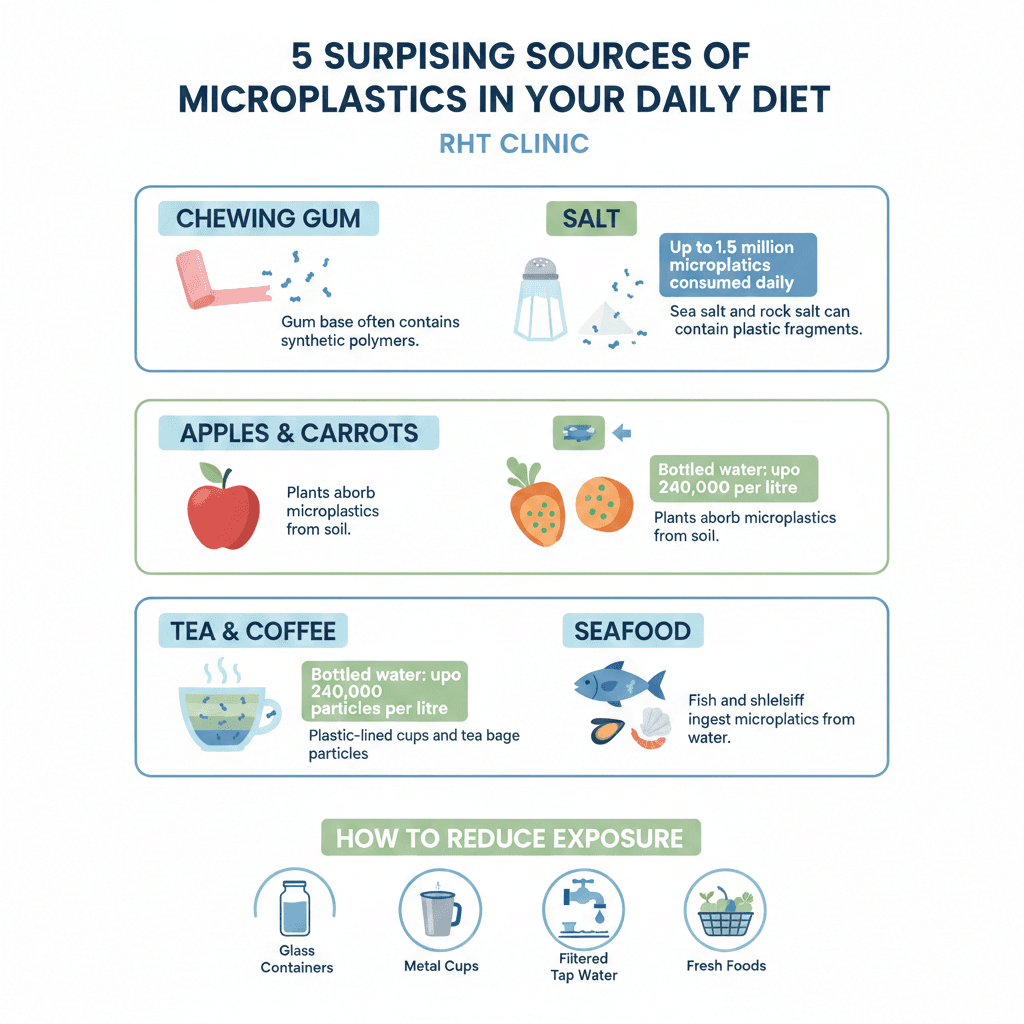
5 Surprising Sources of Microplastics in Your Daily Diet | RHT Clinic
Microplastics are no longer just an environmental concern—they have quietly entered our everyday diets. While most people associate microplastics with seafood, recent scientific studies reveal that exposure from common daily foods and drinks is far more widespread than we realise. According to research, the estimated daily intake of microplastics can range from zero to 1.5 million particles per day, depending on lifestyle and dietary habits. Surprisingly, one of the largest contributors is not food at all—but bottled drinking water. At RHT Clinic, we believe in educating patients about hidden health risks. Below, our experts break down five unexpected sources of microplastics in your daily diet, along with practical steps to reduce exposure.
1. Chewing Gum: A Hidden Plastic Habit
Many people don’t realise that chewing gum is essentially a form of plastic consumption.
Most commercial chewing gums are made from a synthetic gum base containing plastics and rubber, combined with flavourings and sweeteners. As the gum is chewed, tiny plastic particles are released into the saliva.
What studies show:
One gram of chewing gum can release up to 637 microplastic particles
Most microplastics are released within the first 8 minutes of chewing
“Natural” plant-based gums release similar amounts, likely due to processing and packaging contamination
Expert tip:
To reduce exposure, avoid frequent gum chewing or chew one piece for longer instead of replacing it repeatedly.
2. Salt: Even the Purest Ingredient Isn’t Plastic-Free
Salt appears simple and natural, yet studies have found that 94% of salt samples worldwide contain microplastics. Because of this widespread contamination, salt is even used by researchers as an indicator of environmental plastic pollution.
Key findings:
Terrestrial salts (such as Himalayan salt) often show higher contamination than sea salt
Plastic packaging and processing play a major role
Plastic spice grinders can release over 7,600 particles from just 0.1g of salt
Expert tip:
Use ceramic or metal salt grinders and store salt in glass or steel containers instead of plastic.
3. Apples and Carrots: Microplastics in Fruits & Vegetables
Microplastics and nanoplastics can enter plants through soil and water, especially via their roots. Research has detected plastic particles both inside and on the surface of fruits and vegetables.
What research indicates:
Apples and carrots showed higher contamination levels
Lettuce showed comparatively lower levels
Overall exposure from fresh produce is still much lower than processed foods
Important reassurance:
Despite these findings, fruits and vegetables remain essential for health. Their antioxidants—such as anthocyanins—provide strong protective benefits.
Expert advice:
Continue consuming fresh produce, but wash thoroughly and prioritise organic sources when possible.
4. Tea and Coffee: Heat Increases Plastic Exposure
Hot beverages are a surprisingly significant source of microplastics—not just because of tea bags, but also due to cups, lids, and packaging.
Major contributors:
Plastic-lined disposable cups release microplastics when exposed to heat
Tea leaves, coffee grounds, and milk may already contain microplastics
Hot drinks contain more microplastics than cold beverages
Additional findings:
Milk stored in glass bottles contains fewer microplastics
Some drinks in glass bottles (like beer or soft drinks) may still be contaminated due to painted metal caps
Expert recommendations:
Switch to loose-leaf tea
Use metal or glass reusable cups
Choose plastic-free tea bags (cotton-sealed, not biodegradable plastic)
5. Seafood: Less Than You Might Expect
Seafood often receives the most attention when it comes to microplastics—but studies suggest it may not be the worst offender.
Research insight:
Filter-feeding seafood like mussels contains around 0.2–0.7 particles per gram
This is significantly lower than the billions of microplastics released from plastic tea bags
Key takeaway:
Seafood is not the primary source of dietary microplastics compared to everyday packaging and drinking habits.
How to Reduce Microplastic Exposure in Daily Life
While eliminating microplastics entirely may not be possible, you can significantly reduce exposure by making small changes:
Avoid storing food in plastic containers
Do not microwave food in plastic
Reduce consumption of highly processed foods
Switch from bottled water to filtered tap water
Use glass, steel, or ceramic kitchenware
The biggest contributor:
Bottled water can contain up to 240,000 microplastic particles per litre. Switching to filtered tap water is one of the most effective steps you can take.
Final Word from RHT Clinic
Microplastics have become an unavoidable part of modern life, but awareness empowers prevention. By understanding where microplastics come from and making informed lifestyle choices, you can reduce unnecessary exposure and support long-term health.
For more expert-backed health insights and preventive care guidance, stay connected with RHT Clinic.
Leave a Reply