Oral Cancer Explained | Early Signs, Risks & Treatment
At RHT Clinic, I meet many patients who feel worried when they hear the words oral cancer or mouth cancer. But understanding it in simple terms really helps.
Oral cancer starts in the soft tissues of your lips or inside your mouth. Most of the time, it begins in the squamous cells — the thin, flat cells that line the mouth. These cells usually grow in an orderly way, but sometimes their DNA changes. When that happens, the cells begin to grow out of control and form a small lump or tumour.
If we don’t catch this early, the tumour can slowly spread deeper into the mouth and even to the lymph nodes in the neck. That’s why noticing small changes and getting checked on time makes a big difference.
Who Gets Oral Cancer? Key Risk Factors
Oral cancer can happen to anyone, but some factors raise the risk. Most people diagnosed are around 63 years old, but nearly 1 in 5 patients is younger than 55.
Major Risk Contributors
- Tobacco (cigarettes, cigars, pipes, chewing tobacco)
- Heavy alcohol use
- HPV infection, especially HPV-16
- Low intake of fruits and vegetables
- Chronic mouth irritation
- Weak immune system
Understanding these risks helps you take preventive steps — small lifestyle changes can have a big protective effect.
Symptoms That Should Not Be Ignored
Oral cancer does not always cause pain early on, which is why noticing subtle changes is important. If these symptoms last longer than two weeks, get evaluated at RHT Clinic:
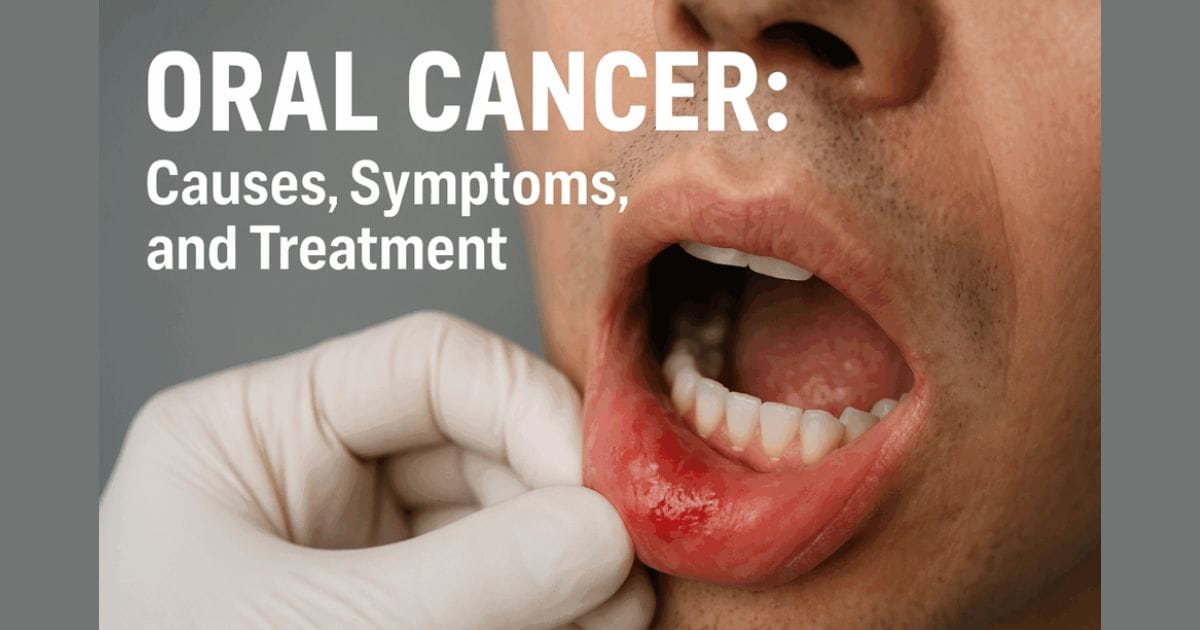
- A sore on the lip or mouth that doesn’t heal
- White or red patches in the mouth
- Loose teeth without dental cause
- A lump, bump, or thickened area
- Ongoing mouth or ear pain
- Pain or difficulty chewing, swallowing, or opening the mouth
Early diagnosis leads to simpler treatment and better outcomes.
How Oral Cancer Is Checked and Confirmed
Evaluation starts with a careful examination of your mouth. If something looks suspicious, a biopsy is done to study it under a microscope.
After confirming cancer, the next step is staging, which ranges from Stage 0 to Stage 4. Staging helps determine how far the cancer has grown or spread.
Tests That May Be Used
- Endoscopy to examine deeper areas of the throat
- CT scan, MRI, PET scan to check lymph nodes and other structures
Treatment Options
Treatmentdepends on the tumour’s location, stage, and overall health. Some patients need only one type of treatment; others need a combination.
1. Surgery
Often the first and most effective route. The tumour — and sometimes nearby lymph nodes — are removed. Reconstruction may be needed for larger areas to restore appearance and function.
2. Radiation Therapy
Targets and destroys cancer cells. Often used after surgery, or as a primary treatment when surgery isn’t possible.
3. Chemotherapy
Uses strong medications to kill cancer cells. Frequently combined with radiation for more advanced cases.
4. Immunotherapy
Helps the immune system detect and attack cancer cells. Useful for advanced or recurrent oral cancer.
Living With an Oral Cancer Diagnosis
A cancer diagnosis can feel overwhelming, but understanding your condition helps you regain control.
What Dr. Faheem Ahmed Recommends
- Get clear information about your stage and treatment plan
- Discuss reconstruction, speech therapy, and swallowing rehabilitation
- Ask whether you are a candidate for clinical trials or targeted therapy
- Utilize support groups and counselling to manage emotional stress
- Stay in close contact with your care team during treatment
1. Is oral cancer curable?
Yes. When detected early, oral cancer is highly treatable, with excellent outcomes. Early diagnosis is the strongest predictor of success.
2. What is the most common early sign of oral cancer?
A non-healing sore or persistent white/red patch inside the mouth is often one of the first signs.
3. Does oral cancer always cause pain?
No. Many early-stage oral cancers are painless, which is why regular dental and medical check-ups are essential.
4. How can I reduce my risk?
Avoid tobacco, limit alcohol, maintain good oral hygiene, eat fruits and vegetables, and address chronic mouth irritation quickly.
5. How often should I get screened?
Annual oral cancer screenings during dental check-ups are recommended. If you have high-risk habits, more frequent evaluations may be advised.
Leave a Reply